
What We Do
Addressing Four Evils
Our mission is based on what, taking after Dr. King, we call the “Four Evils”: racism/identity-based discrimination; economic injustice/poverty; violence; and climate disruption. Almost everything we work on fits into one of these four areas.
Racism / Discrimination: Racism is America’s “original sin” and we must oppose it root and branch. Everyone deserves equal opportunity and equal protection, and the right to live in peace according to their principles. In this category we include discrimination based on religion, ethnicity, sexual orientation and gender identity, etc.
Economic Injustice / Poverty: Mahatma Gandhi said that poverty “is the worst form of violence.” We take seriously our religions’ directives to care for “the least of these,” and start from the principle that human needs are human rights, meaning that everyone should have access to safe and affordable housing; food; clean water; health care (including reproductive and gender-affirming healthcare); and a stable climate.
Violence: The United States is and has always been a violent country, including interpersonal violence, domestic and sexual violence, violence by law enforcement; endless warfare abroad, and increasingly, political violence. We are committed to preaching, teaching, and behaving non-violently. We also support common-sense gun policies, including red flag and safe-storage laws, and bans on perpetrators of domestic and sexual violence having access to guns.
Climate Disruption: The destruction of God’s creation, particularly by global climate change, is an emergency that requires the efforts of all of us to address. The consequences of climate chaos will impact poorer communities and communities of color most of all, so we recognize that by addressing environmental issues we will also be addressing poverty and racism. We advocate for a rapid and comprehensive move away from fossil fuels and into efficiency and renewable energy, including home, neighborhood, and municipal solar, and utility-scale wind and solar, to power the future.
The way we address these issues is by coming together in what Dr. King called “the beloved community” – a multifaith, multi–issue coalition from all over the state. We recognize that each of us as individuals, and our faith traditions by themselves, cannot answer all of our questions, or address all of our needs. It is by coming together in mutual respect, cooperation and love that we model the kind of peaceful, compassionate, cooperative world we want to build – and begin to affect meaningful change.

Inside & Outside the Dome
KIFA’s activities are divided into two main areas:
Inside the Dome
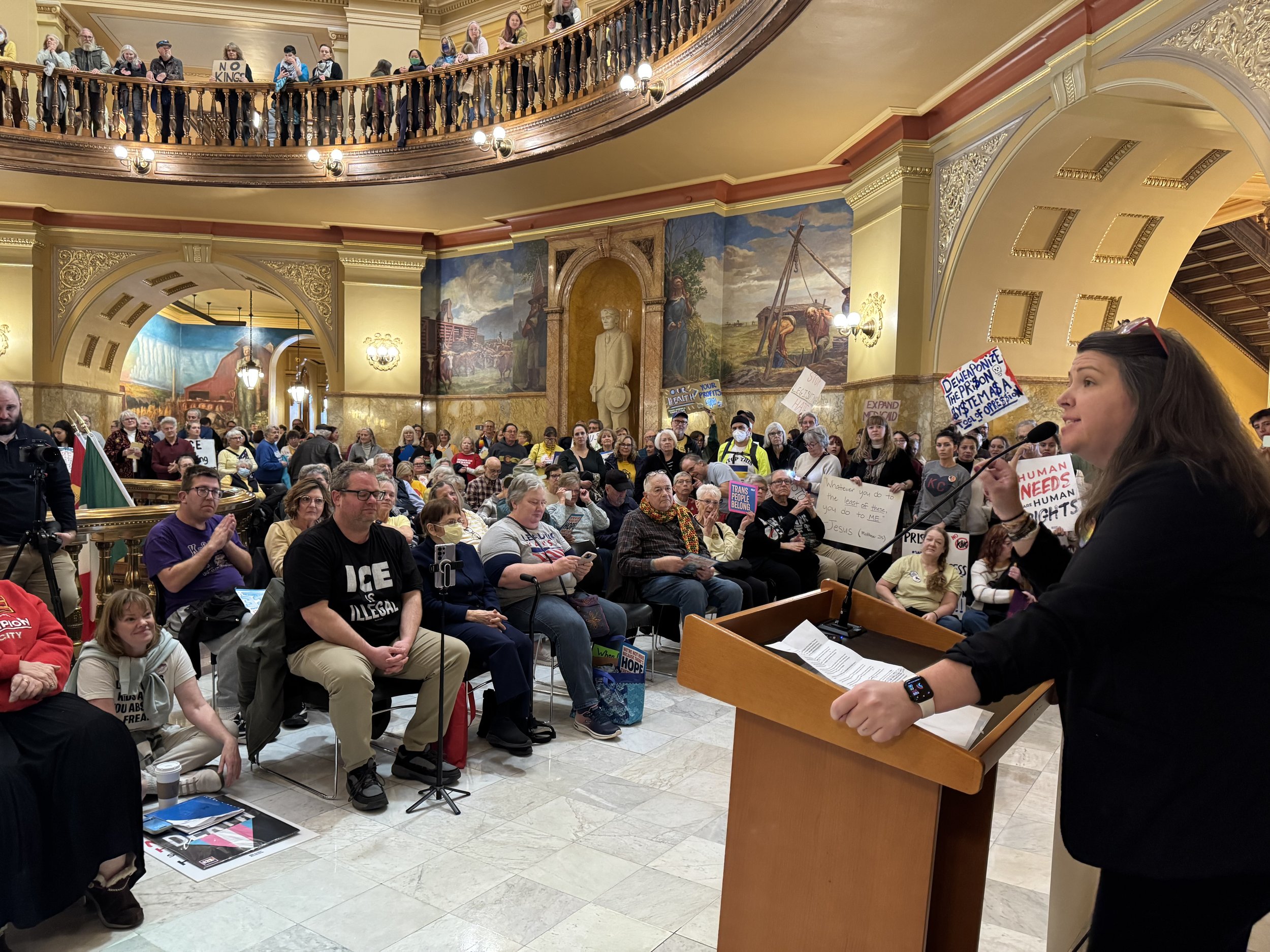
During the legislative session (January through April), we have an ongoing presence in the Kansas statehouse, advocating for our priorities, via…
meetings with legislators;
testifying at hearings;
action alerts;
citizen lobby days;
and where necessary, rallies and direct action.
We work in a number of different coalitions, and often share information and lobbying efforts with other organizations involved in similar work.
Outside the Dome
For the rest of the year, we travel the state, engaging people in our work and building our base of support. Some of the ways we do that include:
Visiting faith communities to preach or teach;
Our trademark “Faith and Public Policy” Forums, bringing solid information on important issues to voters throughout the state;
Voter engagement, particularly through our participation in the Voter Network’s Voter to Voter program;
Social and cultural events, including “KIFA Coffeehouses,” informal get-togethers that include music, conversation, and some political education.
We also hold a number of online events, including policy briefings, book groups, and “KIFA Conversations” – usually a virtual visit from a local or national figure involved in justice work.

Small Cities Project
We want to find everyone who would support KIFA’s mission and activities, connect them to our organization and network, and develop them as activists and advocates for our social justice platform, and we know that there are thousands of justice-minded folks in the small cities and rural communities in Kansas. In order to amplify our presence and reach in these communities, we developed our Small Cities Project in 2023. Since then, we’ve created strong connections with individuals and faith communities in Manhattan, Hutchinson, Salina, Winfield, Newton, Emporia and beyond. Contact Tatyana Younger, KIFA’s Organizer, or Sheri Ellwood, KIFA’s Rural Engagement Coordinator, to learn more about our outreach efforts in these areas!